On 21 October 2026, the Interreg Euro-MED Natural Heritage Mission brought together 53 participants for its second thematic webinar of the year. The session explored how scientific evidence, local experience and collective action can influence water governance, while providing an opportunity to discuss and refine the Mission’s policy recommendations on water.
Bridging the gap between local solutions and water policy
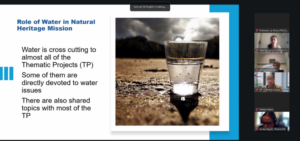 Water resilience is one of the Mediterranean’s most pressing challenges, as climate change intensifies droughts, water scarcity and pressures on freshwater and coastal ecosystems. Addressing these interconnected challenges requires stronger cooperation between policymakers, researchers, practitioners and local communities, as well as governance approaches that recognise the essential role of healthy ecosystems.
The Natural Heritage Mission has placed water resilience at the centre of its 2026 policy and advocacy activities, translating the experience and solutions developed by its Thematic Projects, Associated Partners and wider community into actionable policy messages.
Building on the first thematic webinar held in May 2026, which identified shared water-related challenges and emerging policy priorities, the second webinar marked another step in this collective process.
From scientific evidence to policy influence: lessons from the New Water Culture
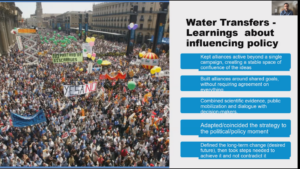 The webinar featured a keynote presentation by Samuel Gil, from the New Water Culture Foundation. His intervention invited participants to look beyond the traditional understanding of water as a resource, recognising its ecological, social and cultural value, its importance for human rights and its essential role in sustaining Mediterranean landscapes and communities.
Drawing on experiences from Spain, including the mobilisation around the proposed Ebro River water transfer and the work of long-standing citizen water networks in Andalusia, Samuel Gil illustrated how scientific evidence, local knowledge and public participation can come together to influence water policy.
A central message was the importance of building lasting alliances across sectors, bringing together researchers, environmental organisations, agricultural stakeholders, trade unions and local communities around shared objectives, even when their perspectives differ.
The presentation also highlighted that policy influence requires sustained engagement. Securing the adoption of a proposal is only one step: monitoring its implementation and maintaining cooperation beyond individual campaigns or projects are equally important for achieving long-term change.
Collectively shaping the Mission’s water policy recommendations
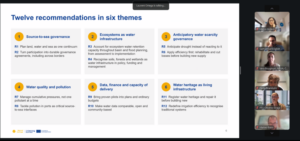
The second part of the webinar focused on the Mission’s draft 2026 water policy recommendations. The interactive session invited participants to review and discuss 12 draft recommendations organised around six interconnected priorities:
- Source-to-sea governance, promoting more integrated planning across terrestrial, freshwater and marine ecosystems and stronger stakeholder participation.
- Ecosystems as water infrastructure, recognising the contribution of wetlands, forests, soils and other natural ecosystems to water retention and resilience.
- Anticipatory water scarcity governance, strengthening proactive drought planning and prioritising sustainable water management.
- Water quality and pollution, addressing cumulative pressures on water bodies and improving environmental management.
- Data, finance and capacity for delivery, supporting the integration of project results into planning and budgets, alongside more accessible and comparable information.
- Water heritage as living infrastructure, recognising the contribution of traditional water systems and practices to sustainable water management.
Through an interactive Mentimeter exercise, participants shared their views on the relevance of the recommendations and identified opportunities to strengthen their formulation and implementation.
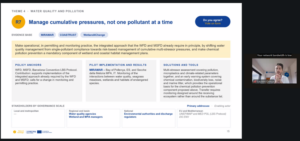
The exercise revealed broad support for the proposed policy directions, alongside constructive suggestions to make the recommendations more operational and responsive to territorial realities. Participants also reflected on cross-cutting considerations, including transparency, social equity, cooperation and intergenerational perspectives.
The feedback collected during the webinar will contribute to refining the recommendations and ensuring that they reflect the experience, priorities and solutions emerging from the Natural Heritage Mission.
Next steps: bringing Mediterranean solutions into policy dialogue
This webinar is part of a broader participatory process to develop policy recommendations grounded in the work of the Natural Heritage Mission and its community. The next major milestone will be the 4th Natural Heritage Mission Institutional Dialogue, taking place on 24–25 November 2026 in Marseille, France. The event will bring together policymakers, public authorities and practitioners to explore how regional ambitions and territorial solutions can be translated into more effective policy and governance approaches.
Explore the webinar materials: The presentations, recording and results of the interactive exercise are available in the webinar materials folder.