Solve the Challenge 2026 Awareness
Campaign: Water crisis: What WE can do
Water Crisis
A systemic combination of climate, usage and governance
The Interreg Euro-MED Natural Heritage Mission launches the Solve the Challenge 2026 campaign, to highlight what we can do to tackle the water crisis in the Mediterranean. Launched in May in Portugal and foreseen to conclude in November in Marseille, the campaign will enhance coordinated online communication activities to disseminate knowledge, highlight practical examples, and provide accessible information on water challenges and responses. Offline initiatives, including workshops, local events, and stakeholder engagement processes, will facilitate dialogue, knowledge exchange, and capacity building among practitioners, decision-makers, and citizens.
But… What do we mean by ‘Water Crisis’ in the Mediterranean region?
Water is a defining element of the Mediterranean region. It shapes landscapes, sustains ecosystems, and underpins economic and social systems. However, the region is now facing increasing, interconnected water-related pressures, which are intensified by climate change and structural imbalances in how water is managed and valued. At the core of the Mediterranean water crisis lies the degradation of water bodies and aquatic ecosystems. Rivers, wetlands, lakes, and transitional waters are not only resources to be used; they are living systems with multiple ecological functions and intrinsic value.
Why does the water crisis Concern our Natural Heritage?
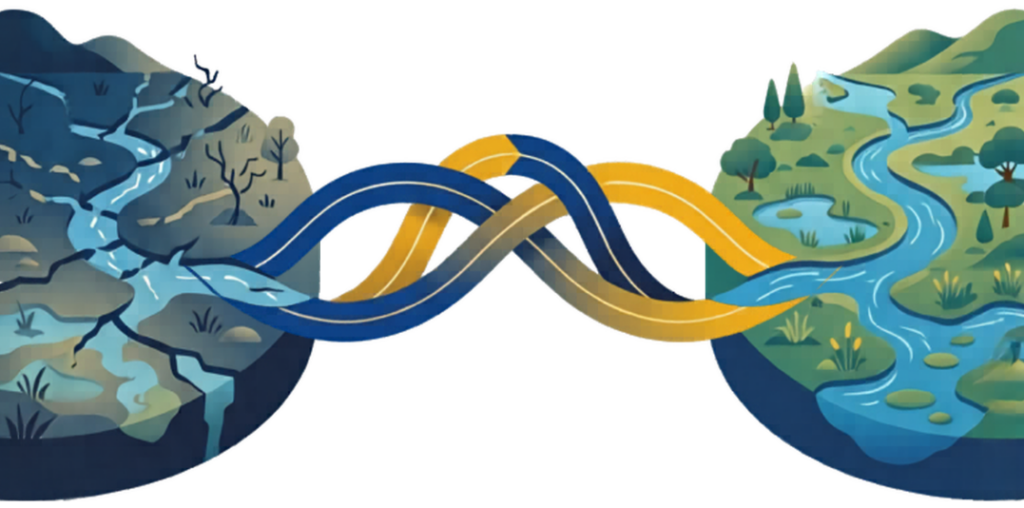
Across the Mediterranean region, all ecosystems are undergoing significant alteration. Freshwater species and habitats are in decline, river basins are increasingly fragmented and modified, and wetlands are being lost or degraded. These changes reduce the capacity of ecosystems to regulate water flows, maintain water quality, and buffer the impacts of climate variability. As ecological functions are lost, the resilience of territories diminishes, making them more vulnerable to droughts, floods, and other extreme events. In this context, water quality degradation represents a critical challenge to tackle.
Pollution: In many parts of the Mediterranean, water resources may still be physically present but are no longer usable due to pollution. Agricultural practices contribute to the dispersion of pesticides and nutrients into water systems, while emerging contaminants, such as microplastics and PFAS, are increasingly detected. Untreated or insufficiently treated used water, as well as industrial activities like mines, further degrade water quality. In coastal areas, over-extraction of groundwater leads to salinization, reducing the availability of freshwater resources for residential and tourist demand. These pressures have direct consequences for ecosystems, human health, and economic activities, illustrating how environmental degradation reduces societal benefits.
Scarcity: Alongside quality issues, the Mediterranean is characterized by structural water stress. The region is among the most water-scarce in the world, with approximately 180 million people already living below the water scarcity threshold [source]. This number is expected to increase significantly by 2050.
Climate change is intensifying these trends, with longer and more frequent droughts, less predictable rainfall, and more extreme events. At the same time, demand for water continues to rise. Agriculture accounts for the majority of water use, reaching up to 80 per cent in some southern areas, while urbanization, tourism, and population growth further increase pressures. This results in growing competition between ecosystems, agricultural production, urban needs, and economic activities.
Water is a cycle, and all of its forms are interconnected; therefore, the degradation of freshwater systems also has direct implications for the Mediterranean Sea. The basin is naturally characterized by an imbalance between evaporation and freshwater inflow, and this imbalance is becoming more pronounced. Reduced river flows limit the transport of nutrients and sediments essential to marine ecosystems. Pollution carried by rivers contributes to coastal degradation, including algal blooms and biodiversity loss. Coastal wetlands, which play a key role in ecological processes and fish reproduction, are increasingly under pressure. These dynamics highlight the continuity between freshwater and marine systems and the need for integrated approaches.
Governance: All challenges related to the water crisis need sound governance for improvement: access to information and plural knowledge, sound rulings, transparency and accountability, as well as appropriate methodologies for societal engagement are key to good water management and policies. Regulatory frameworks are not always effectively enforced, and policies can be fragmented or inconsistent across sectors. Long-term planning remains limited, and climate change risks are not systematically integrated into decision-making processes. Access to reliable and transparent water-related data is often constrained, and mechanisms for stakeholder and citizen participation require strengthening. These factors contribute to a situation in which the crisis is not only physical but also institutional.
How can the Natural Heritage Mission address the water crisis?
The Mediterranean water crisis reflects a broader imbalance between ecological systems and human pressures. Addressing it requires recognizing the fundamental role of healthy water ecosystems as the basis for all uses and benefits.
Local and regional actors in our Community of Practice are implementing a range of solutions to restore ecological functions and improve water management. These include the restoration of rivers and wetlands, the development of drought management tools, the conservation and protection of water heritage in agriculture, and the implementation of nature-based approaches for flood mitigation. These initiatives demonstrate that effective responses exist and can be adapted to different contexts.
By combining awareness-raising, practical action, and policy engagement, the 2026 awareness campaign aims to support a transition toward more sustainable, resilient, and ecosystem-based water management across the region. Moreover, this year’s campaign will contribute to policy development by connecting practical experiences with strategic recommendations. It will support more integrated approaches to water governance, emphasizing the need to restore and protect ecosystems, improve coordination across sectors, strengthen investment in sustainable infrastructure, and enhance transparency and participation in decision-making processes.
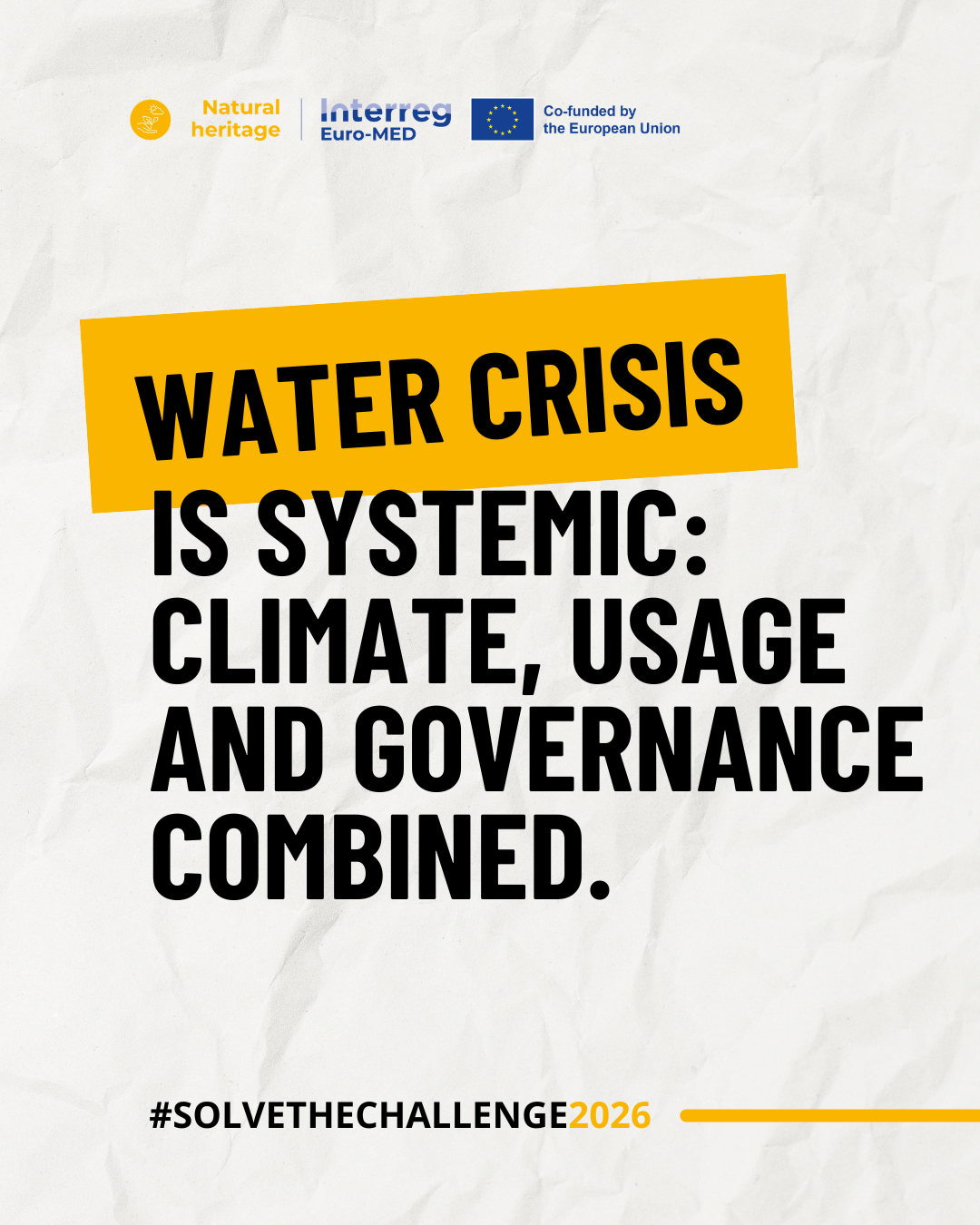
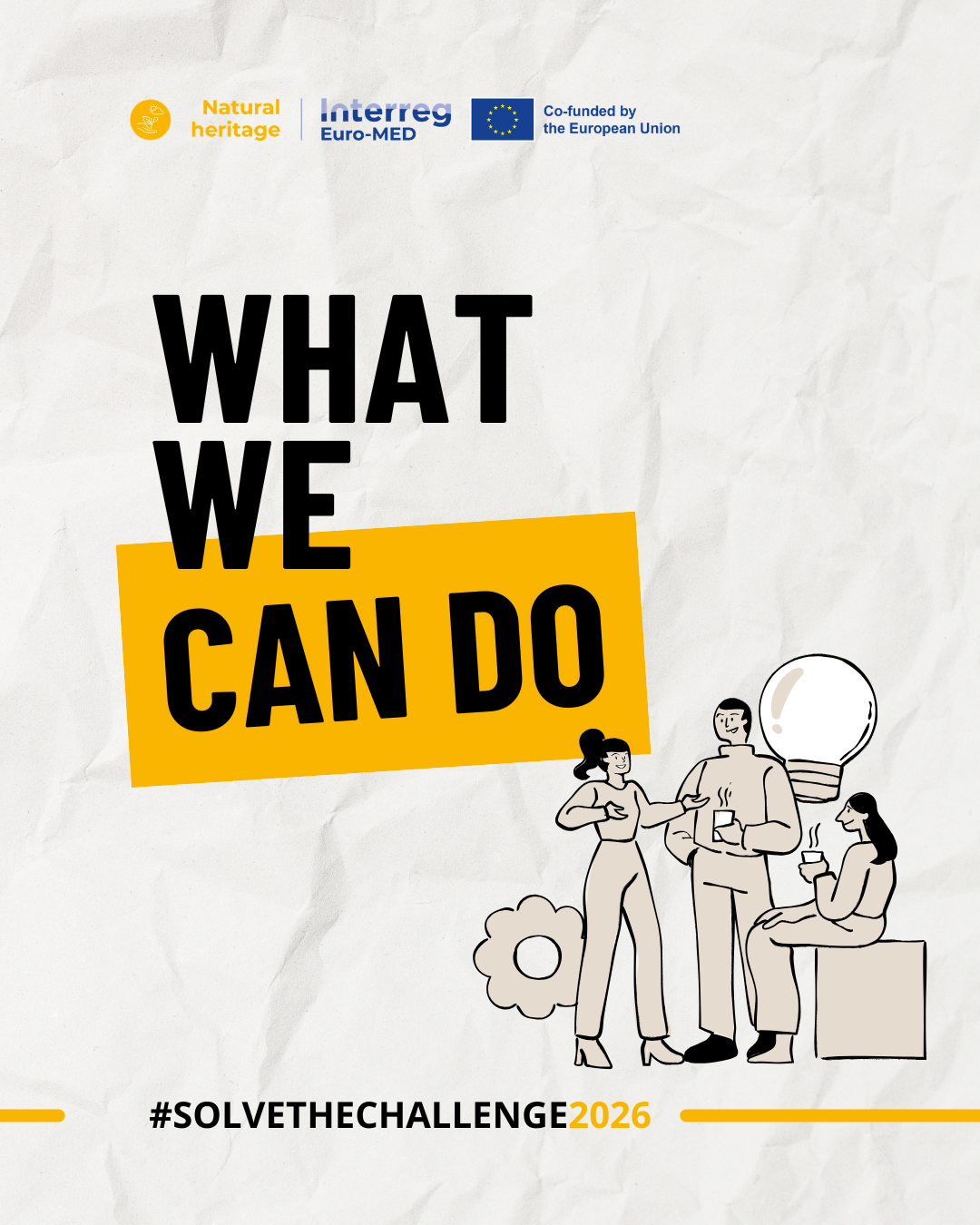
“Water Crisis: What WE can do.”
For the Solve the Challenge 2026, we have developed the core concept:
“Water crisis: what WE can do.”
Here is a clear breakdown of the vision behind this choice:
The Power of “WE”!
The term “WE” is used as a triple-layered call to action, representing:
Mission – All of us working collectively toward a common goal.
Thematic Projects – Each individual project contributing its specific expertise.
Individuals – Every person taking personal responsibility and initiative.
Statement vs. Question
We intentionally chose a statement rather than a question. This is because real solutions are not just possible—they are already being implemented. It is a declaration of capability and existing progress.
A Focus on the Present
Our concept is an invitation to move away from hypothetical or purely future-oriented thinking. We advocate for concrete action in the present.
Action Today: Only by acting now can we impact the current state of our world.
Legacy: Our immediate steps are what will ultimately safeguard the future of all ecosystems and the generations of every living species.
Have a look at our campaign’s contents