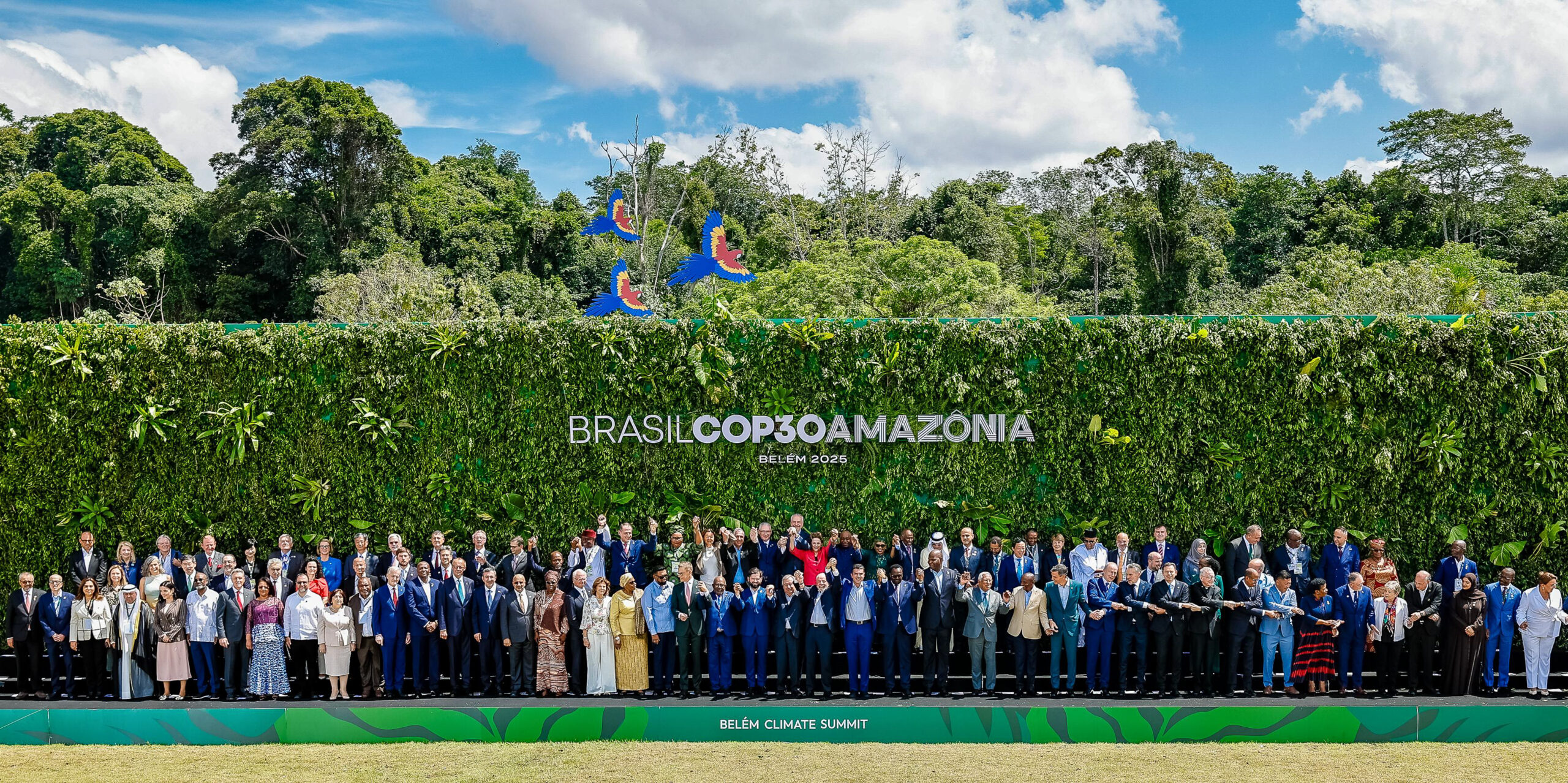
The 30th session of the Conference of the Parties (COP30) concluded in Belém, Brazil, on 21 November 2025. This summit was specifically positioned as the “Implementation COP,” shifting the global focus from generating new pledges to operationalising existing commitments. With over 56,000 registered participants, the event was the second-largest climate conference to date.
If someone had told me in 1992 that the world would still be negotiating climate action at COP30, I might have sighed. Yet, if they had told me that every nation would still be adhering to the same framework, guided by science and law, I would have been profoundly hopeful — as I am today.
Kilaparti Ramakrishna, scientist who helped to draft the UN Framework Convention on Climate Change
(in his interview to Nature / 25-11-2025: https://doi.org/10.1038/d41586-025-03854-3)
Indicators for the Global Goal on Adaptation
A primary objective in Belém was defining indicators for the Global Goal on Adaptation. Negotiators eventually adopted a framework of 59 indicators covering finance, technology transfer, and capacity building. However, the process was fraught. Last-minute adjustments to the text raised concerns about the operational credibility of these metrics. Consequently, technical refinements have been extended through 2027, creating a period of data uncertainty for nations preparing their second Biennial Transparency Reports.
National Adaptation Plan
The National Adaptation Plan (NAP) assessment was formally adopted after two years of deadlock. This decision specifically highlights the integration of traditional knowledge and gender-responsive strategies. While the assessment acknowledges progress made by developing nations, it stopped short of providing a concrete roadmap for scaling financial support or aligning climate goals with biodiversity strategies.
The fossil fuel debate
The transition away from fossil fuels remained the most contentious point of the summit. While a coalition of 88 countries advocated for a formal roadmap to phase out fossil fuels and their associated subsidies, the final consensus text did not include these specific mandates. Instead, the conference introduced the “Belém Mission to 1.5” and the “Global Implementation Accelerator.” These initiatives are intended to support the 1.5°C limit through enhanced Nationally Determined Contributions (NDCs), though their effectiveness depends entirely on domestic enforcement.
Deforestation discussions
On deforestation, the outcomes were mixed: the final agreement reaffirmed the commitment to halt and reverse deforestation and forest degradation by 2030, but countries failed to agree on a concrete roadmap to achieve this goal. Progress on finance was also limited, as the Tropical Forests Forever Facility raised only a quarter of its $25-billion target, far short of the long-term ambition to create a $125-billion endowment to support those protecting forests.
International trade
For the first time, trade – including carbon trade measures such as the EU’s Carbon Border Adjustment Mechanism (CBAM) – were discussed as part of formal negotiations. The discussions centred on unilateral measures and border carbon adjustments, which many developing nations view as economic barriers. The parties reached a compromise to hold a series of dialogues on trade cooperation, with a high-level review scheduled for 2028.
Gender action plan
The conference finalised the gender action plan, which mandates the use of disaggregated data to ensure climate policies account for race, age, and disability. This adds a layer of social complexity to national reporting that was previously absent.
What is next?
Looking to the next cycle, COP31 will be hosted in Antalya, Türkiye. In a unique administrative arrangement, Australia will hold the “Presidency of Negotiations” to ensure the concerns of Pacific Island nations remain central to the agenda. As Brazil transitions out of the presidency, the focus shifts to domestic implementation of the “just transition” mechanisms agreed during the summit.